Looking at Robin Hood Through Historical Lens
 Although many may think of Robin Hood as a mere character individuals know from their childhood, he is actually a particularly historical figure. It is still unknown whether or not Robin Hood resembles any particular historical individual, but it is evident that the plot of the story has a rather historical significance. It is imperative to integrate other subjects into social studies; therefore, the topic I chose to focus on is despite a piece of literature being labeled fiction, authors tend to draw from historical contexts. The students will be given an artifact bag containing items that resemble Robin Hood; the students will have to collaborate the investigate the five W’s (Who, what, where, when, why) of each artifact within the bag. Because this is an investigation, the students will have the ability to research using the computer. The lesson will be taught to is fourth grade, and will focus on the standards are:
 - RH.6-8.1 Cite specific textual evidence to support analysis of primary and secondary sources.
- RH.6-8.2 Determine the central ideas or information of a primary or secondary source; provide an accurate summary of the source distinct from prior knowledge or opinions.
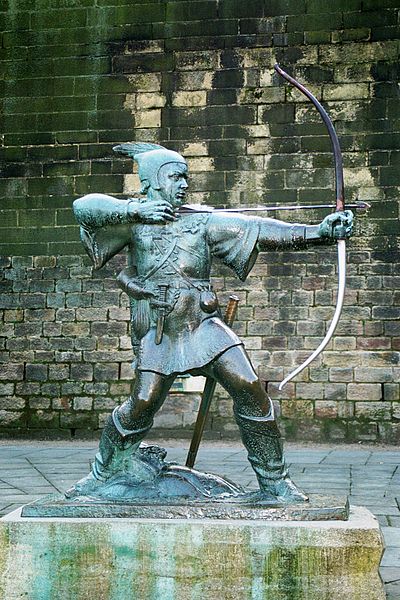


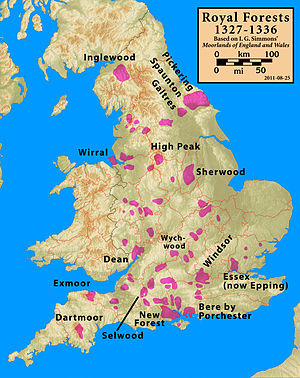 The artifacts that are in the artifact bag is a drawing of Robin Hood, a picture of a statue of Robin Hood, a map of Sherwood Forest, a feather, a pretend bow and arrow, and a political cartoon. I chose the drawing of Robin Hood (spelt Robyn Hode) is depicted in the oldest surviving tale, known as “A Gest of Robyn Hode,” of Robin Hood dated, which was dated in approximately 1450. I chose the statue of Robin Hood because it is located in the same town Robin Hood was set in, which is Nottingham, England; as well, I chose the map of Sherwood Forest because it is the exact forest where the story of Robin Hood takes place. I chose the feather and the bow-and-arrow because they represent the clothing Robin Hood wears in the book and movie.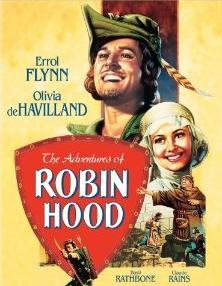
www.boldoutlaw.com because is offers information about the ballads and stories, historical figures, and pictures of Robin Hood. As well, the sight offers a few interviews had with Robin Hood scholars, actors, and authors, as well as other resources for further information.
 The artifacts, movie, and website tie together because they are all related to Robin Hood whether historically or geographically. Prior to watching the movie, I will activate the students’ prior knowledge by asking questions such as: “What do you know about Robin Hood?” and “What kind of things come to mind when I say Robin Hood?” According to Pearson and FIelding, “Perhaps no other phenomenon has influenced instructional research in the last decade as pervasively as our increased understanding of the powerful background of knowledge in reading comprehension” (Fuhler 648). Then, the students will watch the movie, and I will point out things that are particularly historical, such as the middle ages, taxation, and crusades. Once the students finish the movie, they will be peruse the website www.boldoutlaw.com for further information, and to prepare for the artifact bag investigation. Before distributing the artifact bag, I will state the directions, which are to unwrap, inspect, and research the items. Furthermore, I will instruct the students to note who, what, where, when, and why about the artifacts. After the students find the information about the artifacts, they will present their findings to their classmates.
  Artifact bags are a great way to engage students in history, as well as differentiates instruction so the students have the opportunity to experience something new. Investigating artifacts expose students to the curriculum, but also integrates other curricuar areas, such as reading, writing, and social studies “without anxiety or fear of failure” (Fuhler 646). By investigating the artifacts with the use of internet sources, the students are critically thinking and making connections between the movie and artifacts. Additionally, the artifact bag task forces students to collaborate. Students have to “listen to others,” “give everyone fair chances,” and “agree on ideas” (Sunal 220).
Picture of where "The Adventures of Robin Hood" was filmed. The location used for Sherwood Forest is Chico, Califonia.

Robin Hood was filmed is a variety of ways. This particular photo depicts a Robin Hood movie produced by Warner Bros, in which Robin Hood is portrayed by Daffy Duck and Little John by Porky the Pig.

This is a polical cartoon drawn by John Collins; notice the play on the words "steal from the rich and give to the poor" here.
Resources:
Sunal, Cynthia. "Social Studies for the Elementary and Middle Grades" 4th Ed (2011) Allyn & Bacon Inc.: New York, New York.
C. Fuhler, P. Farris, P. Nelson "Building Literacy skills across the curriculum: Forging Connections with the past through artifacts" http://eclass.msmc.edu/file.php/3186/artfactbag_article.pdf
Robin Hood Resources: Robin Hood Bold Outlaw of Barnsdale and Sherwood (2012) http://boldoutlaw.com/

No comments:
Post a Comment